
A Facebook Storytelling Experiment
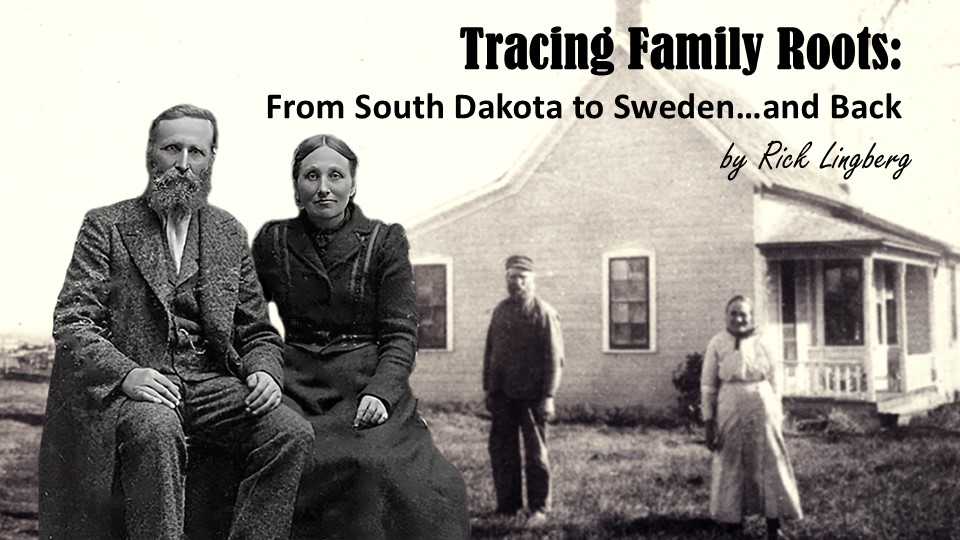
After giving the “Tracing Family Roots: From South Dakota to Sweden…and Back” talk I was asked, “What do you plan on doing with this?” At the time I had no plan, but the question stuck in my mind. So here’s what became, “What next?”.
Before making a trip to Sweden to learn more about my great-grandparents, I discovered my cousin Anders Engstrom through a posting I had put on the Gnarp, Sweden Facebook page which led me to a plethora of Swedish family connections. Well, I took the “Olof & Brita…” story (now called, “Tracing Family Roots…From South Dakota to Sweden…and Back”) and cut it up into 25 segments consisting of 1-3 images and a paragraph or two of text. Beginning January 2, I posted one segment every day for 25 days. The Gnarp Facebook page has 2,900 subscribers. My Beresford math tells me if I’d do that for 25 days there would be a potential of 72,500 opportunities for someone in Sweden seeing the story. Facebook does not have a way a telling you how many actually look at it unless they “react” (like, heart, comment, etc.) in some way. My online marketing experience tells me many might look and a fraction will react. So far, the reaction is nearing 1,000.
Facebook by it’s nature is a ‘short-form’ medium. My experiment was to use the short-form medium to tell a long-form story. I haven’t drawn any specific conclusion from all of this other than if I should ever go back I now have quite a few new Swedish acquaintances and large family whom I never knew existed before this whole project began.
Below you’ll be able to review this story as it was told (internationally) in 25 segments.
Day 1.
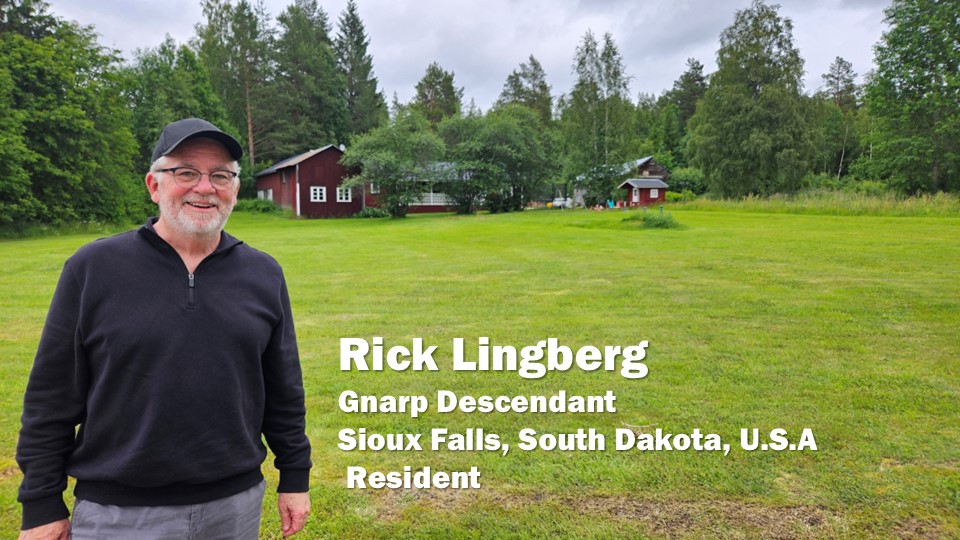
Hello. I’m Rick Lingberg from Sioux Falls, South Dakota, U.S.A. This post is the first of many daily issuances that will follow the journey I made this past July, with my wife Mary, to uncover the story of my Gnarp, Sweden ancestors, Olof and Brita Lingberg. These posts will detail my research process, including correspondence with family historians (both American and Swedish) who aided my journey to discover family connections, sites and records.
Tomorrow: What’s in a name?
Day 2.
What’s in a name? “Lingberg”, that’s mine, always has been. I can assure you there is nothing famous or special about it, but I do own it. Like all of you, I got it from my dad (Rich), he got it from his dad (Walter) and he got it from his dad, my great-grandfather, Olaf who got it from…well, no one seems to know where it came from.
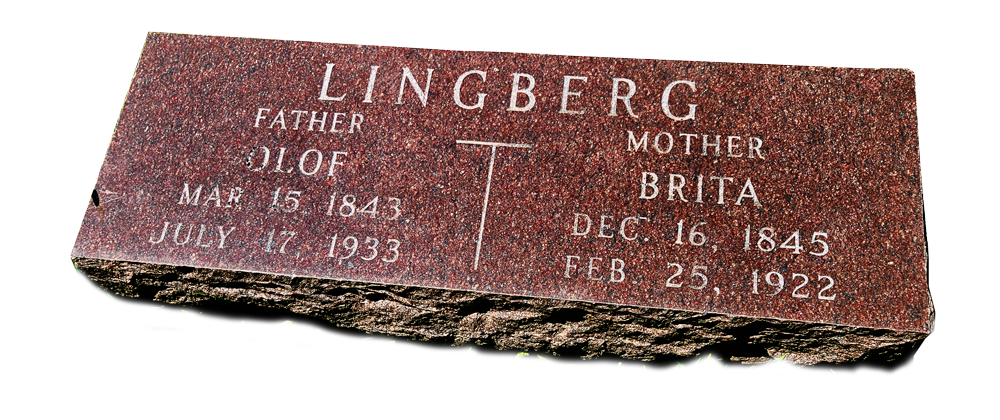
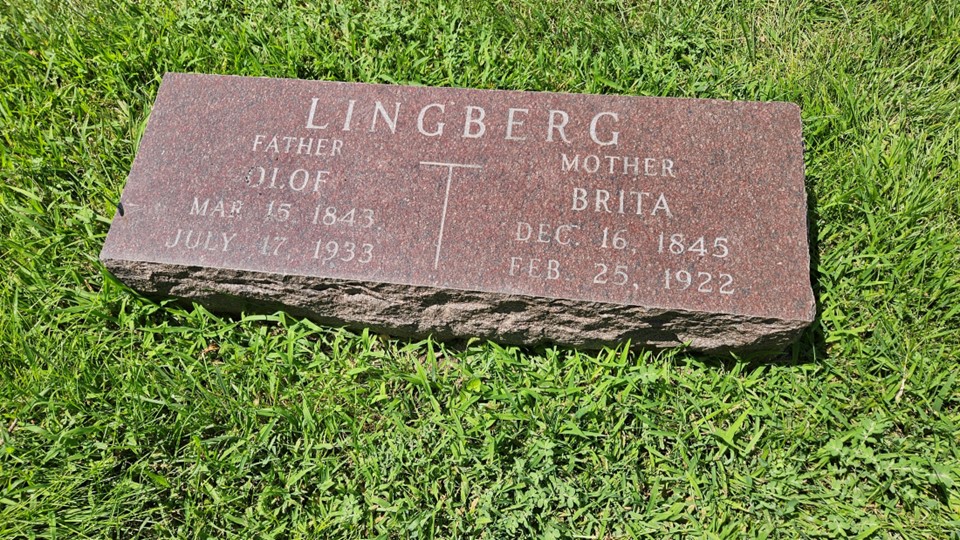
Even though they had passed long before I was born, I knew a little about Olaf and Brita’s (my great-grand parents) life in America, but nearly nothing about their lives before they arrived in from Gnarp, Sweden in 1868. Their gravestone are etched with “Lingberg Father Olof” and “Mother Brita along with the dates of birth and passing. I’ve seen that gravestone every year for decades, usually around Memorial Day. There it is, “Lingberg” plain to see, but not much else. I’ll start there.
Tomorrow: What did the “Swede” book have to say?
Day 3.
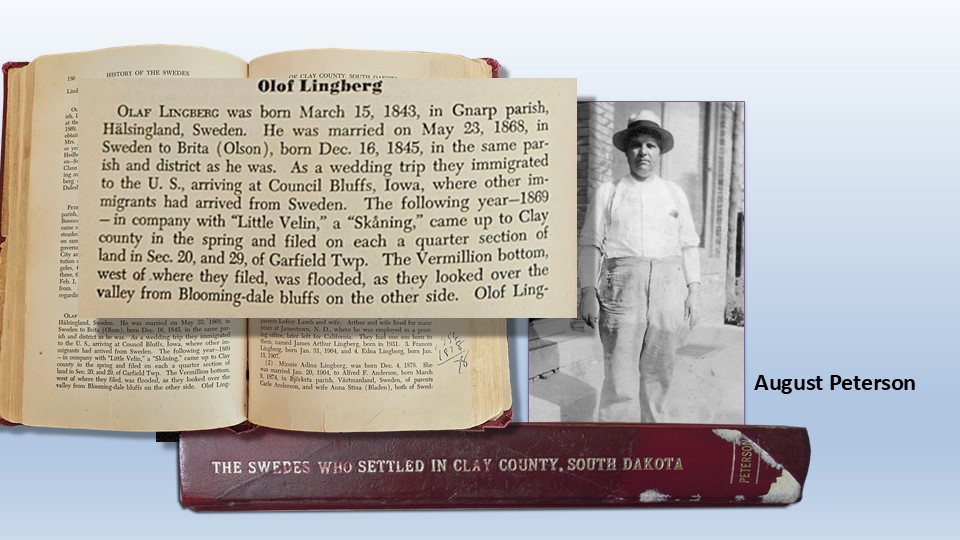
My other Scandinavian great-grandfather, August Peterson emigrated from Namdalen, Norway to South Dakota in 1888. He would marry a Swedish girl, Anna Edlund. August would author the book, The History of the Swedes who settled in Clay County South Dakota. On page 186 he would have only this to say about Olof and Brita’s life in Sweden.
Olof Lingberg was born March 15, 1843 in Gnarp parish, Halsingland, Sweden. He married on May 23, 1868 to Brita (Olson), born Dec. 16, 1845 in the same parish and district as he was. As a wedding trip they immigrated to the U.S., arriving at Council Bluffs, Iowa where other immigrants had arrived from Sweden.
That’s all he had to say about their life in Sweden. I would have to look to other sources for more.
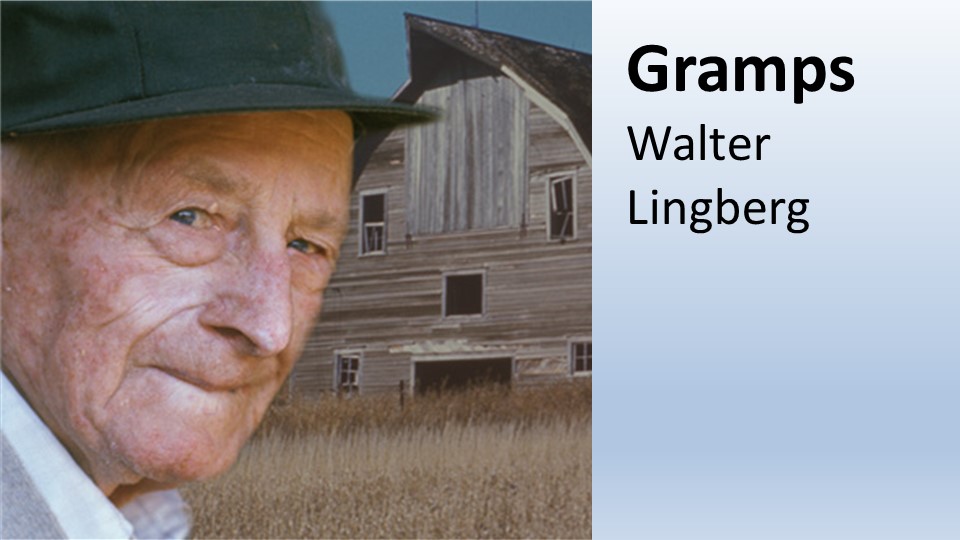
Tomorrow: What did their son, Walter (Gramps) have to say?
Day 4.
In 1978, my friend Al Chute and I were passing the old family homestead farm in Clay County, South Dakota, still owned by my grandfather Walter Lingberg. Old buildings were still standing, good photo subjects, we were armed with our cameras. Later Al suggested I should interview Gramps (now 90 years old). He shared much about growing up on the homestead and a little bit about his parents, Olof and Brita. Here’s a link to what he shared about them: https://fyi-dakota.com/gramps-homestead-story/
Interesting, but no insight to our name origin or Olof and Brita’s life in Sweden.
Tomorrow: What did www.Ancestry.com have to say?
Day 5.
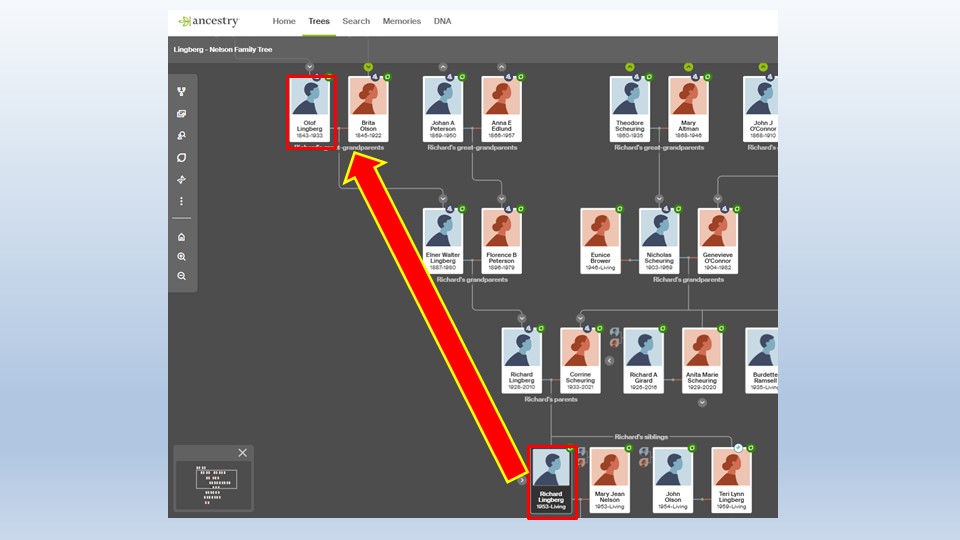
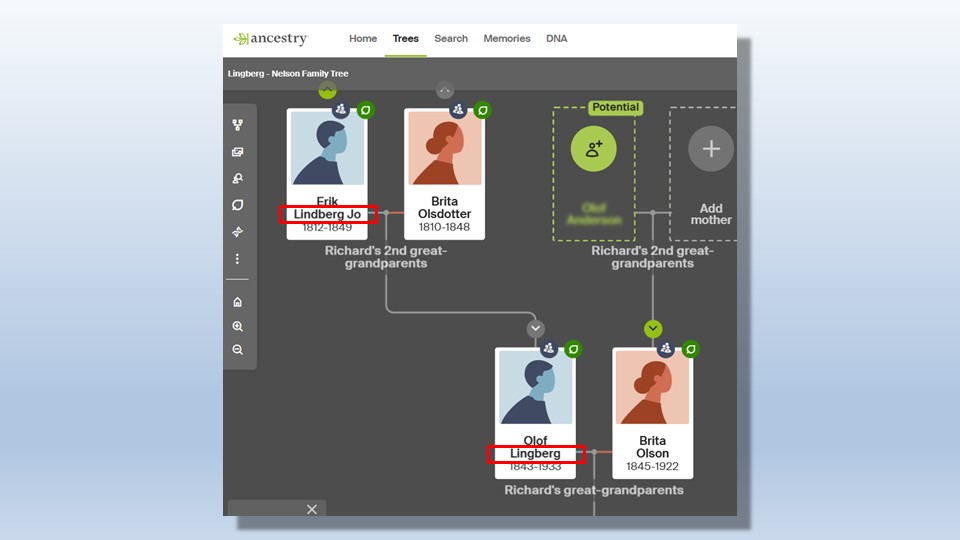
It seemed reasonable that the experts on genealogical algorithms at Ancestry.com would offer some insight into what I was seeking. There it was, my lineage…Olof & Brita…Walter and Florence…Richard and Corrine…and me. But who were Olof’s parents? Turns out their names were Erik and Brita “Lindberg-Jonnson”. That’s not “Lingberg”. Rather than insight I had simply uncovered another mystery to solve.
Tomorrow: Surely, my dad would know.
Day 6
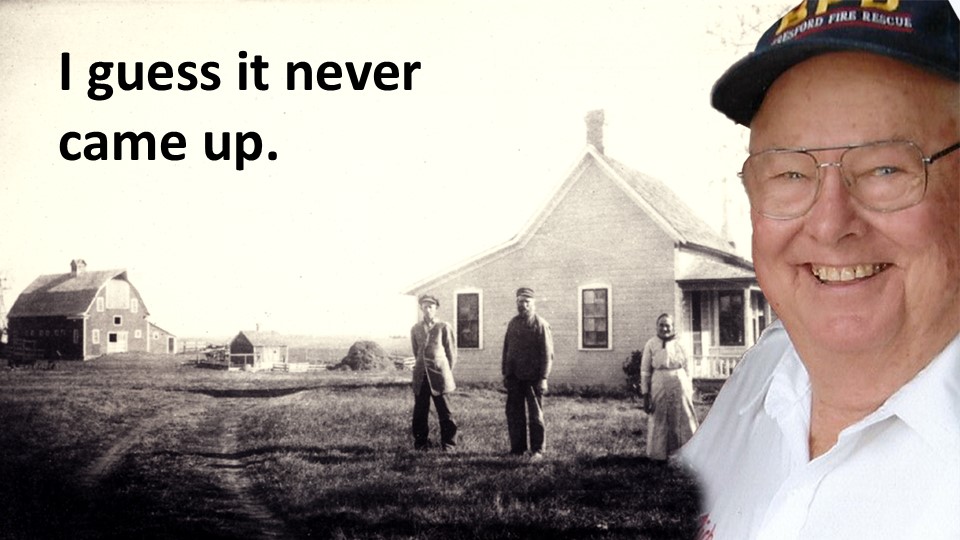
My dad, Richard “Rich” Lingberg was raised on the homestead farm. He spent the first 18 years of his life there. Though both of his grandparents, Olof and Brita had long passed, it seems the comings and goings of many Lingberg relatives would have had some idea about my unsolved family heritage. I’ll just ask him and the mystery should be solved.
“I guess it never came up,” was his answer. Seemingly my last source had run cold. It appeared I would never know.
Tomorrow: A renewed path to family knowledge begins with a wedding invitation.
Day 7
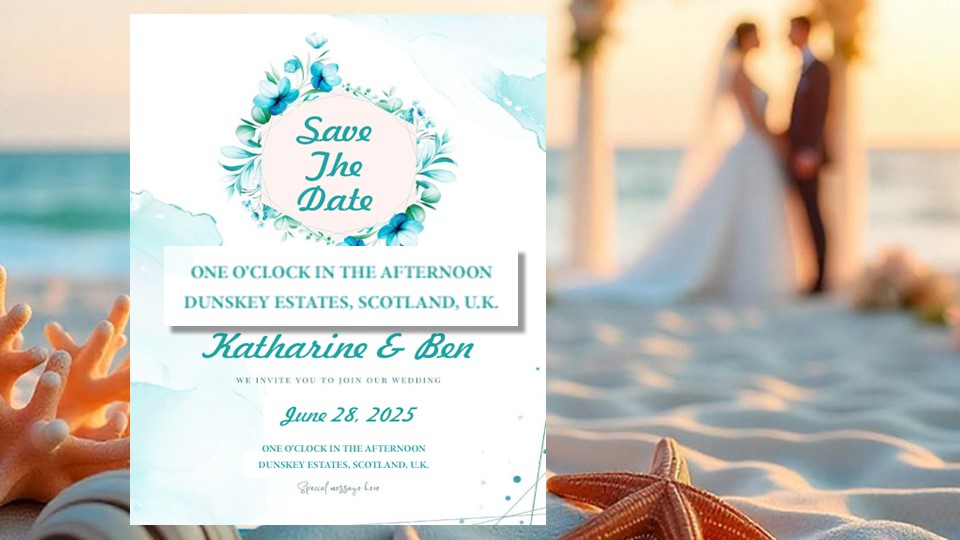
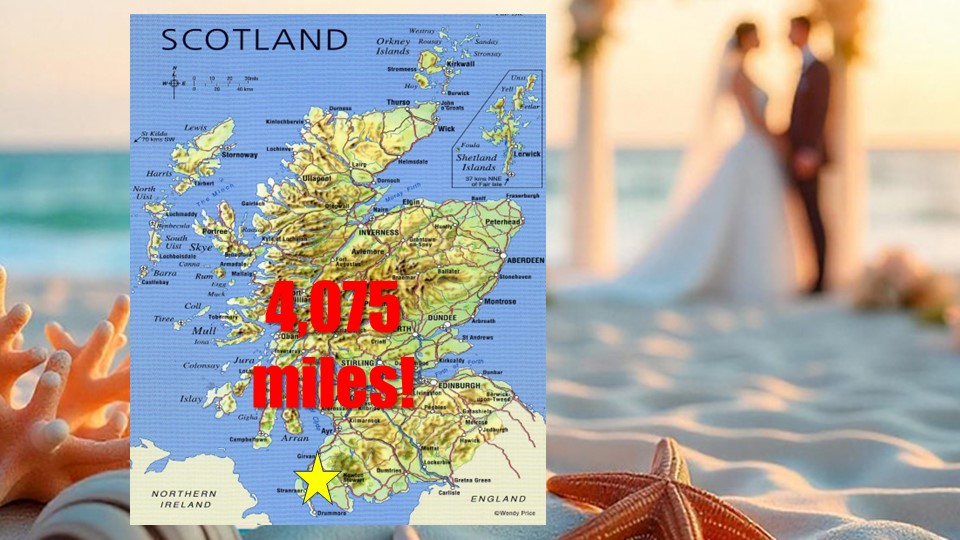
A wedding invitation arrived for the nuptials of our niece (my wife Mary’s twin sister’s daughter). It’s at the Dunskey Estate in Scotland, U.K. That’s 4,075 miles from South Dakota. A long ways and a lot of money for a simple day at the wedding. Turns out it wasn’t “simple”, glad we went, but I didn’t know that at the time.
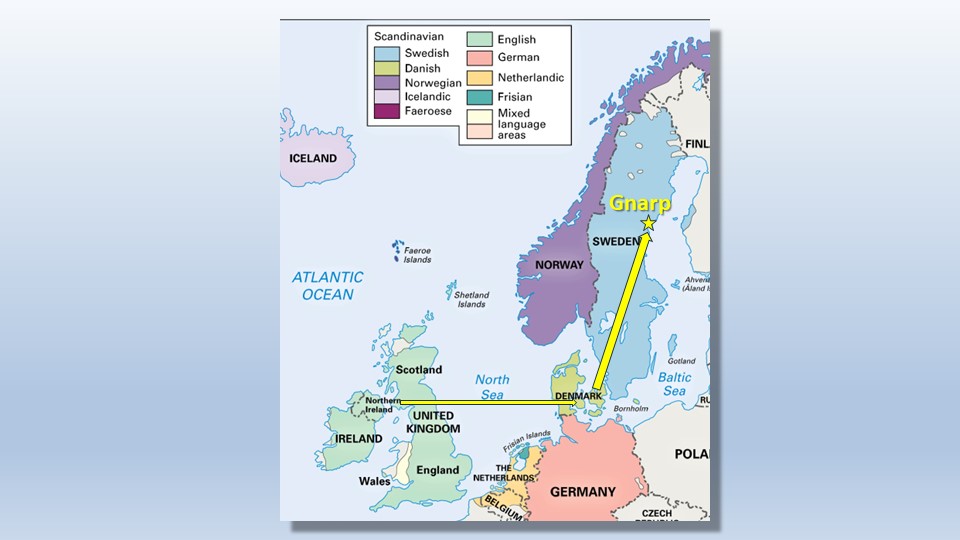
In order to get some value out of the “simple” wedding trip I suggested we extend our travels. Mary was in the midst of researching her Danish ancestry. I had my own quest. Why not go to Denmark and Sweden. More specifically for me, Gnarp.
Just a few problems for me: I don’t know anyone in Gnarp, I don’t speak the language, I don’t know where to start looking.
Tomorrow: Where I started looking…
Day 8
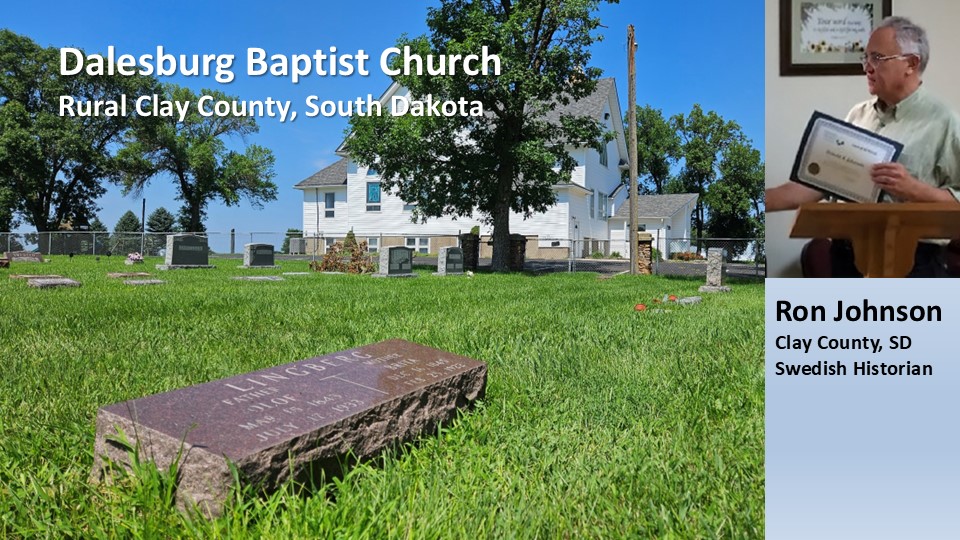
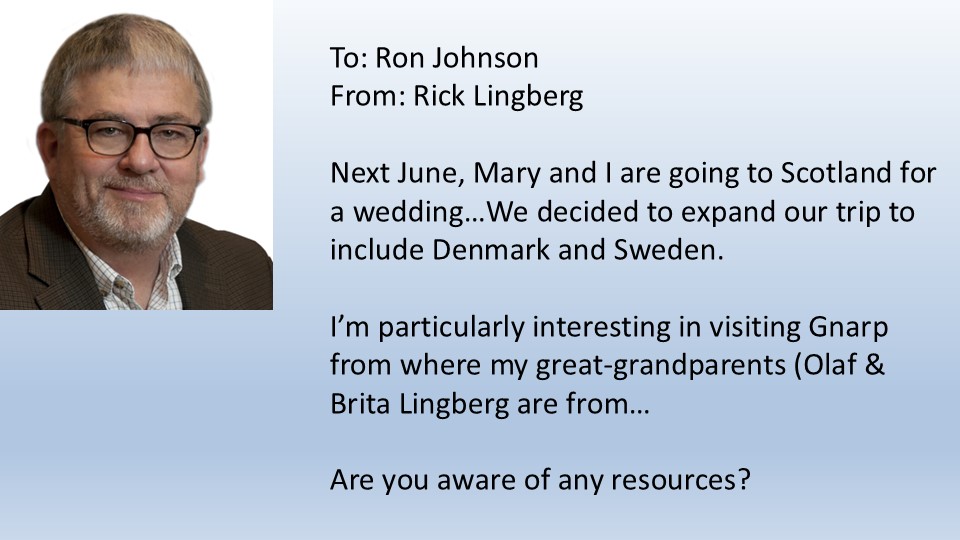
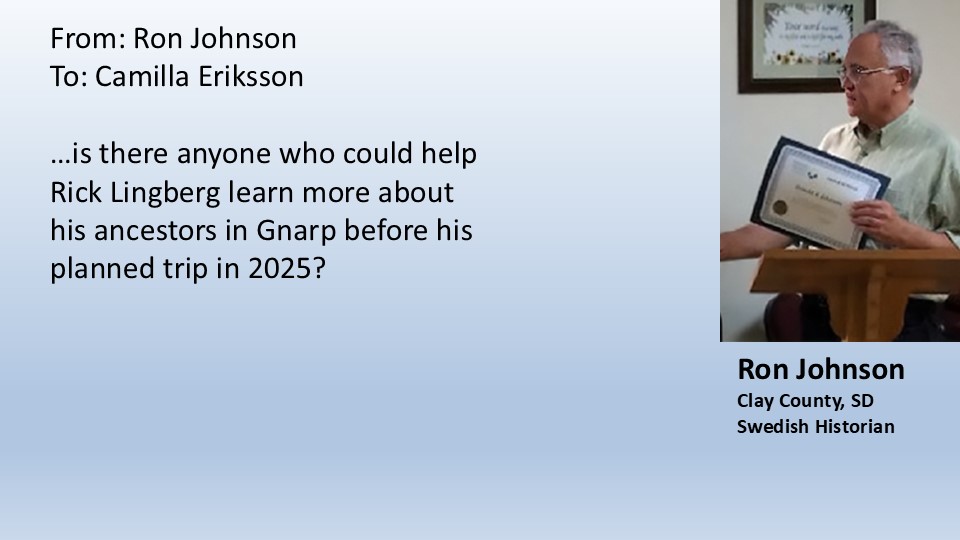
Only a few miles from Olof and Brita’s gravesite at a little country church in Clay County South Dakota lives Ron Johnson, the local Swedish historian and caretaker of August Peterson’s “Swede Book”. I’ll ask him.
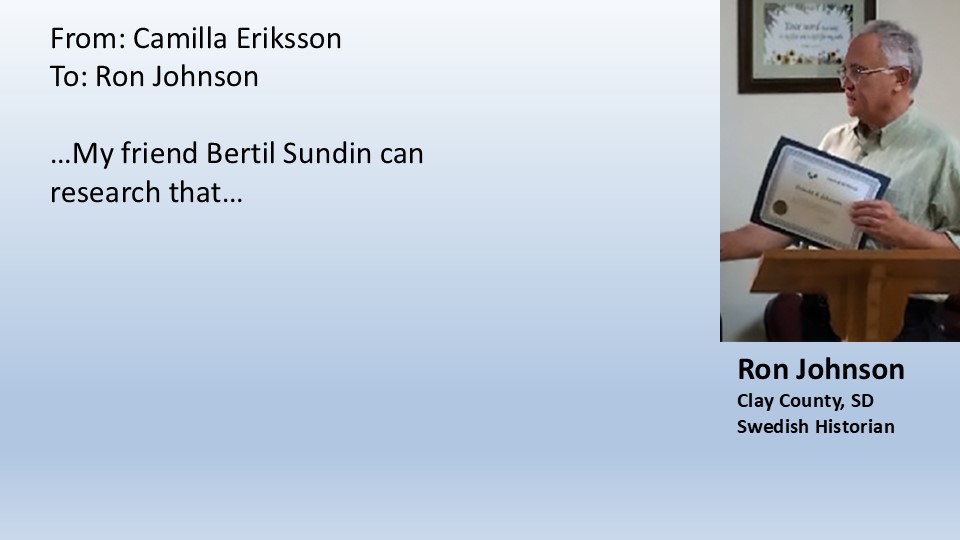
Ron goes to work with his Swedish contacts. First, Camilla Eriksson, then Bertil Sundin.
I just watch their correspondence on my computer screen..
Tomorrow: Bertil’s reveals tragedy strikes the family.
Day 9
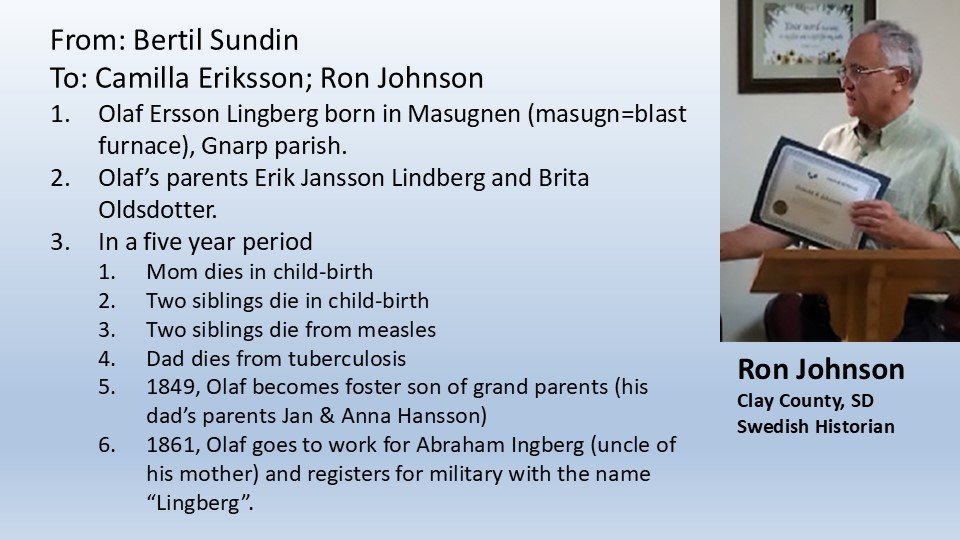
About a week later, Bertil responds.
First, Olof’s birthplace.
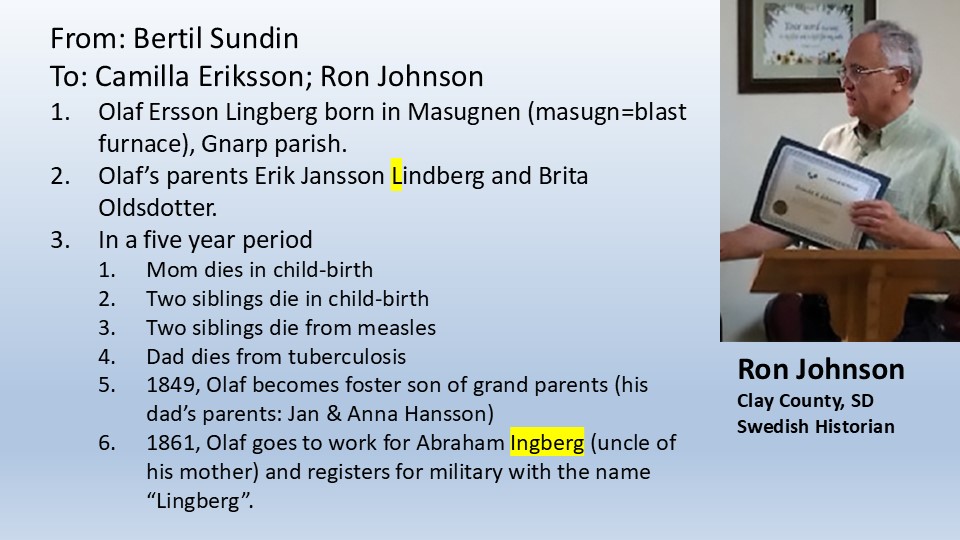
Then Olof’s parent’s names.
Then the tragic loss of Olof’s entire family in a five year period.
Finally, where did six-year-old Olof go after the loss of his entire family?
Still, nothing about Brita and the origin of our name.
Tomorrow: Discovering Swedish relatives..
Day 10
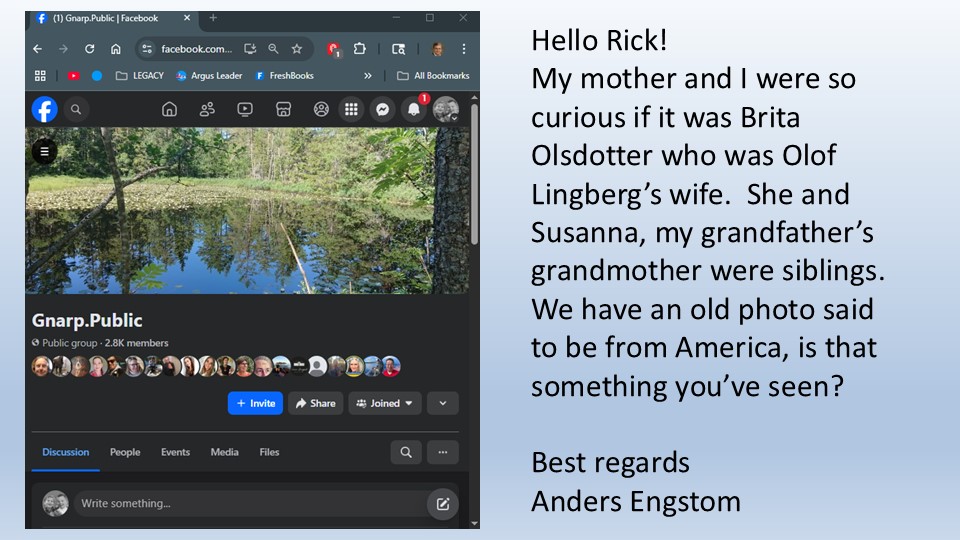
Still no personal connection in Sweden. My wife (Mary) suggests I see if Gnarp has a Facebook page. They do! I post on our planned visit. Many reactions. 1 message…
Hello Rick!
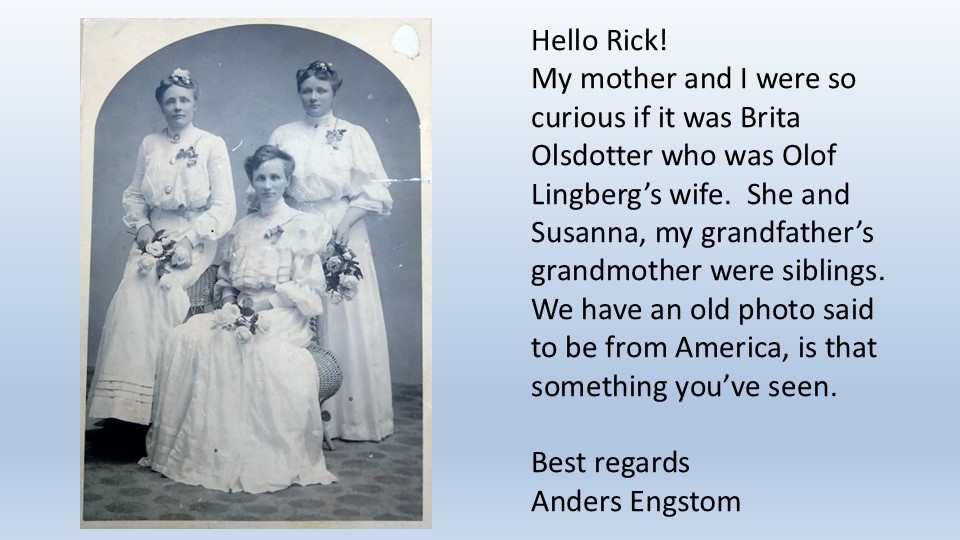
My mother and I were so curious if it was Brita Olsdotter who was Olof Lingberg’s wife. She and Susanna, my grandfather’s grandmother were siblings. We have an old photo said to be from America, is that something you’ve seen.
Best regards
Anders Engstrom
My question, who is Anders Engstrom? Is this a scam?
Tomorrow: The photo that proves otherwise.
Day 11
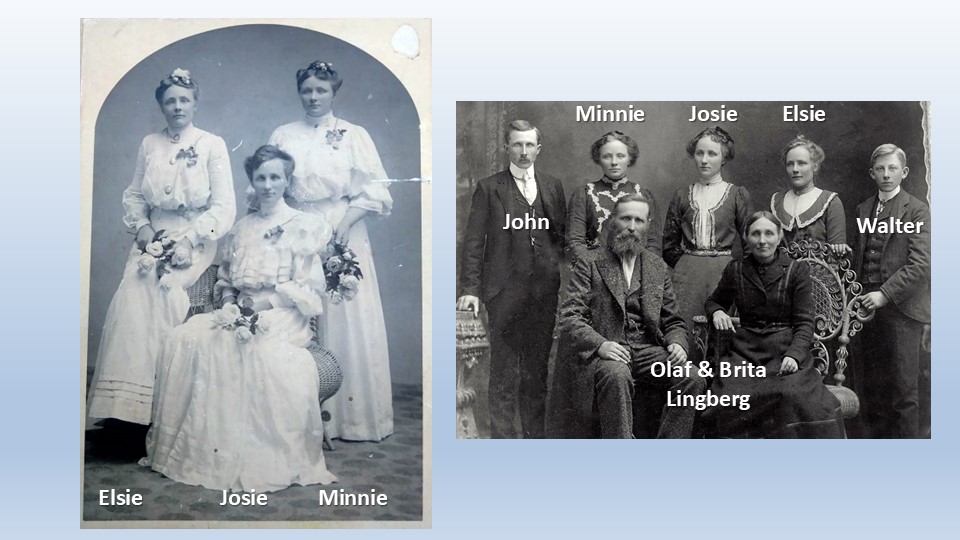
The photo appears to be early 20th century. It’s sent to me. I’m one of 350 million American. Could I recognize them? Is Anders for real? The back of the photo has barely visible hand-written notes. I can make out the names “Elise and Josie”. Coincidently, my great aunt’s names. They look familiar.
I found an old Olof and Brita Lingberg family photo taken in Clay County, South Dakota, U.S.A. My grandfather, Walter, is on the right side of the back row with his oldest sibling John and his three sisters, Minnie, Elise and Josie! Amazing, we’re related!
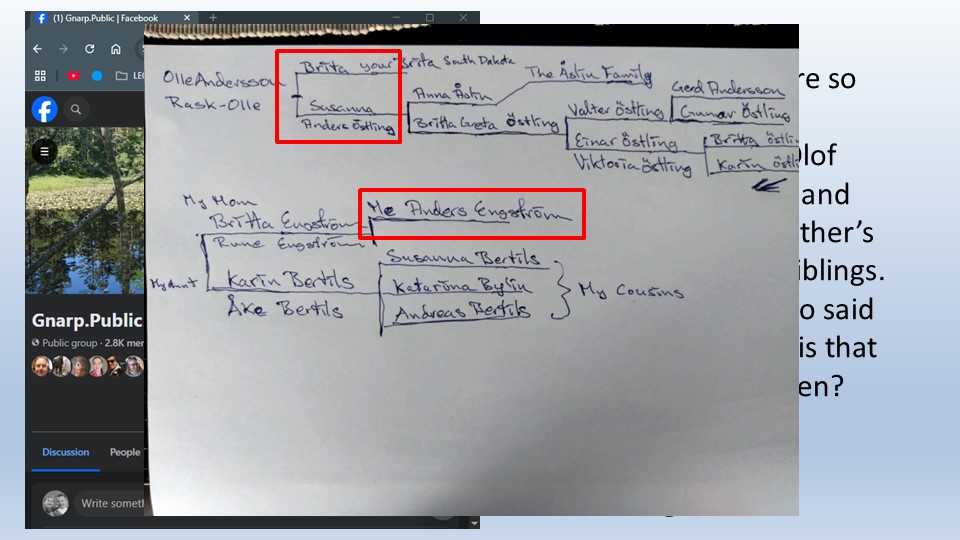
Anders sends his hand-written family tree. It shows my great-grandmother (Brita) and his great-great grandmother Susanna are sisters.
Tomorrow: I find my Sacawejea…
Day 12
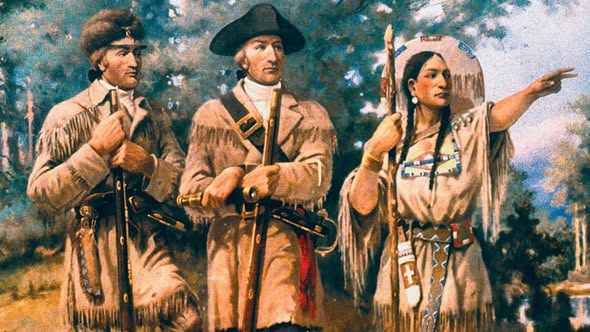
In 1805 President Thomas Jefferson sent two American’s to lead a party to explore newly acquired land from France, the Louisiana Purchase to see if they could discover passageway to the Pacific Ocean. Along the way they would find a young native American women who could help them with native languages and customs on their journey. Her name was Sacawejea.
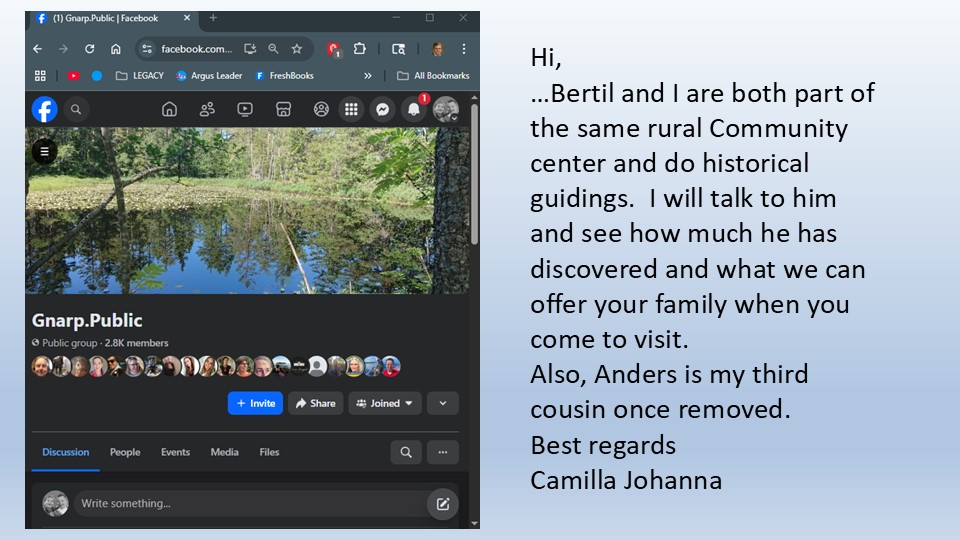
About this time I received a second message on Facebook.
Hi,
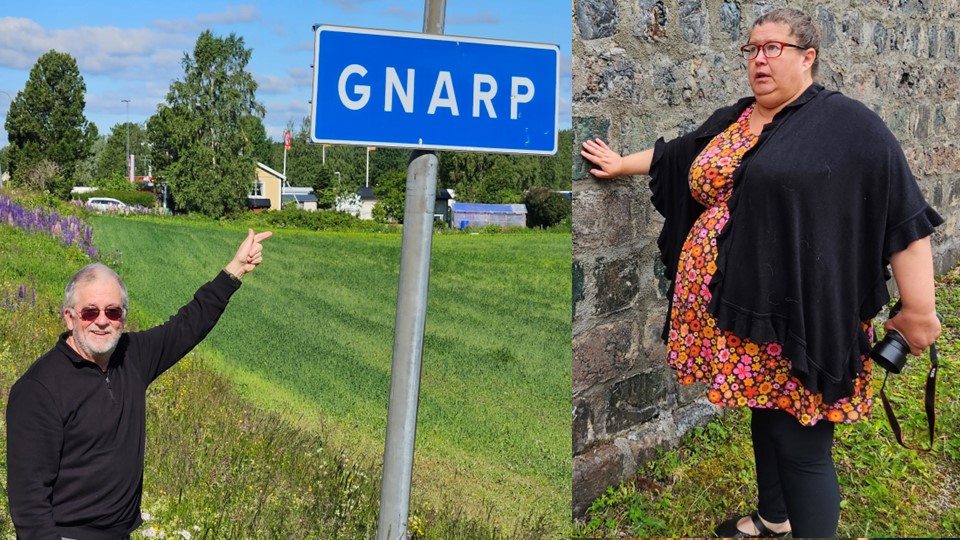
…Bertil and I are both part of the same rural Community center and do historical guidings. I will talk to him and see how much he has discovered and what we can offer your family when you come to visit.
Also, Anders is my third cousin once removed.
Best regards
Camilla Johanna
I had found my Sacawejea!
Tomorrow: Swedish Immigration to America
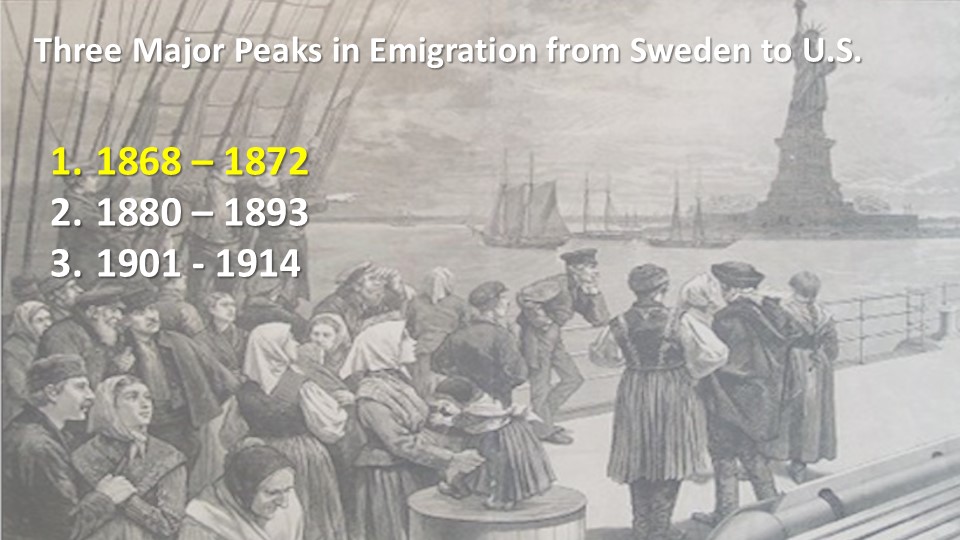
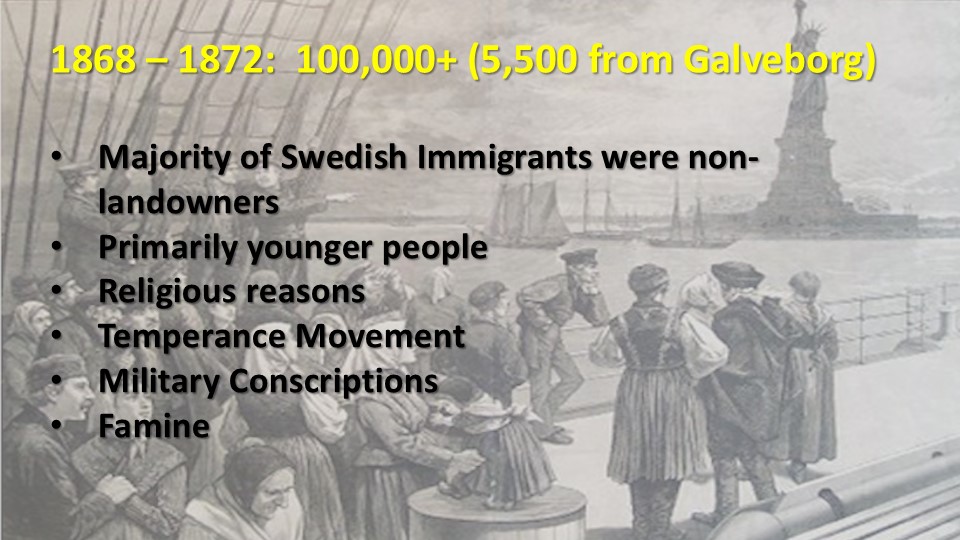
Day 13
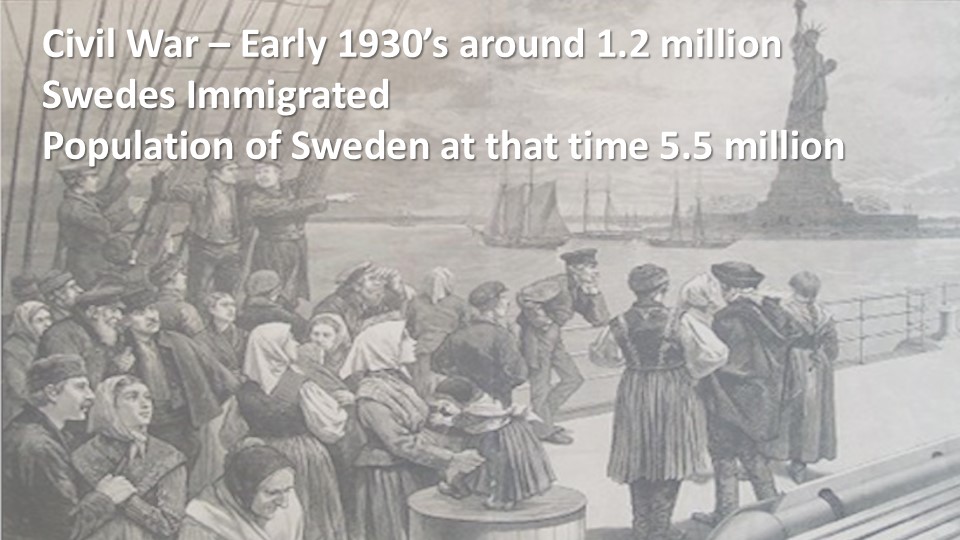
These graphics speak for themselves and I begin to understand some reasons why Olof and Brita (and many thousands of Swedes) decided to go to America.
Tomorrow: What’s going on in America at this time.
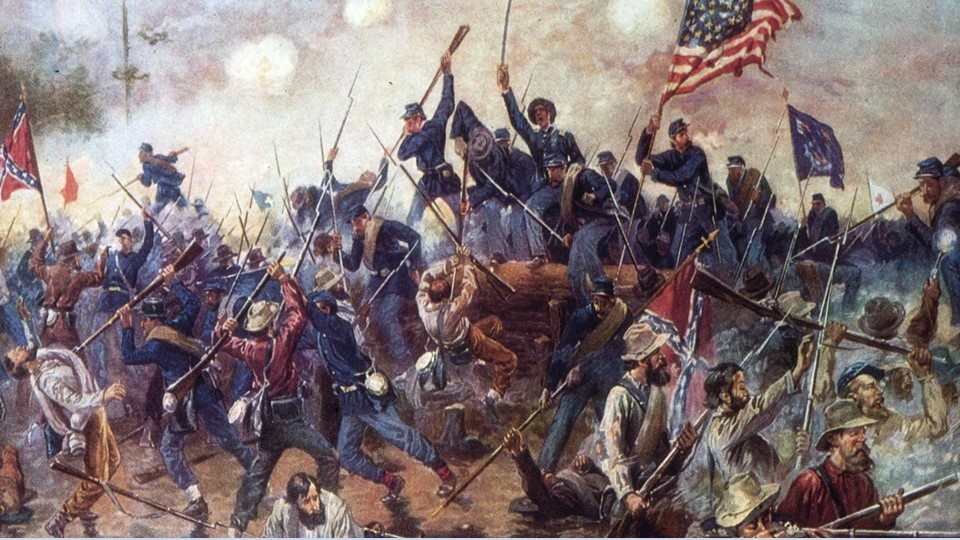
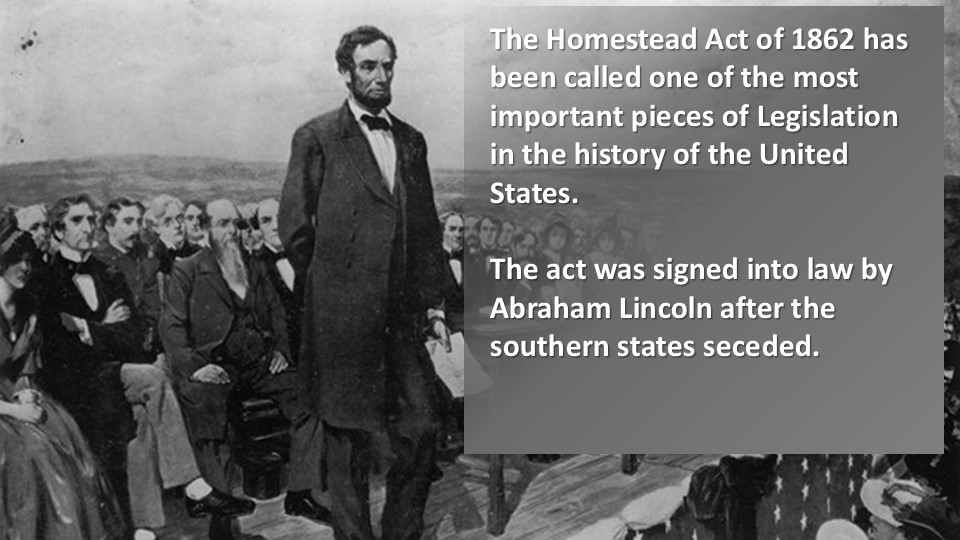
Day 14
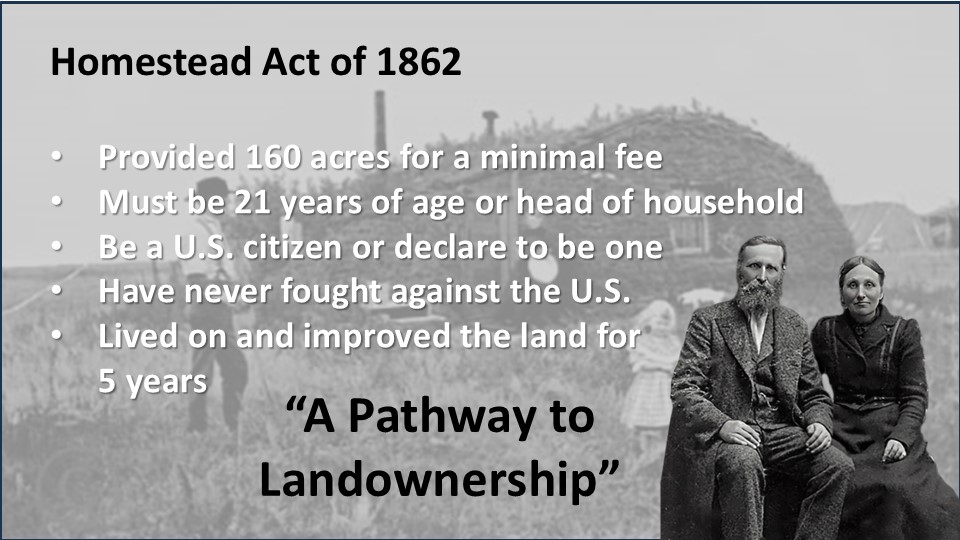
In 1862 America is in the midst of a Civil War when the Homestead Act of 1862 is enacted.
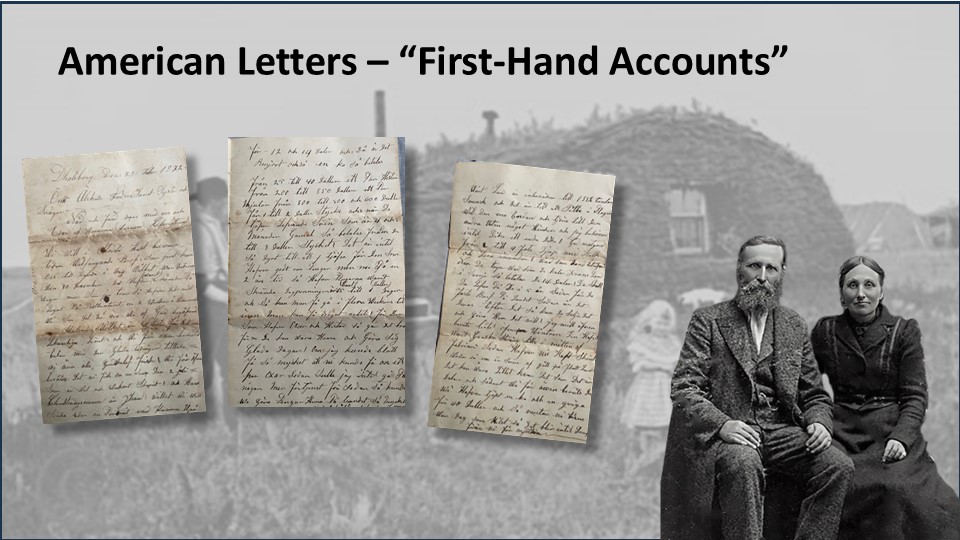
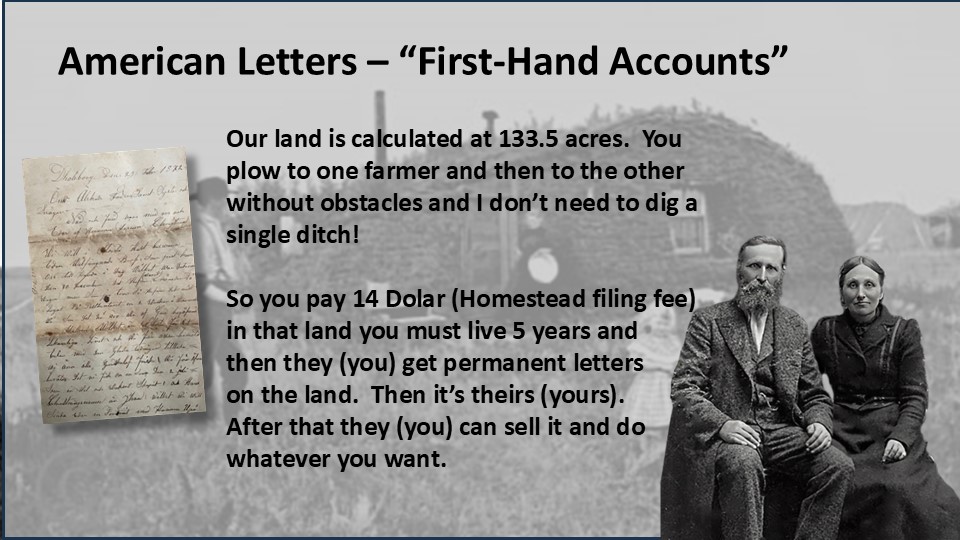
This law turned over vast amounts of the public domain to private citizens. 270 million acres, or 10% of the area of the United States was claimed and settled under this act. It provided opportunities for people like Olof and Brita Lingberg who would otherwise have almost no ability to ever have land of their own in Sweden. It was “A Pathway to Landownership.” They would learn about this chance of a lifetime, primarily, through what we now know as the “American Letters”, correspondence from Swedes who had already made the journey.
Tomorrow: My journey to Sweden begins…
Day 15
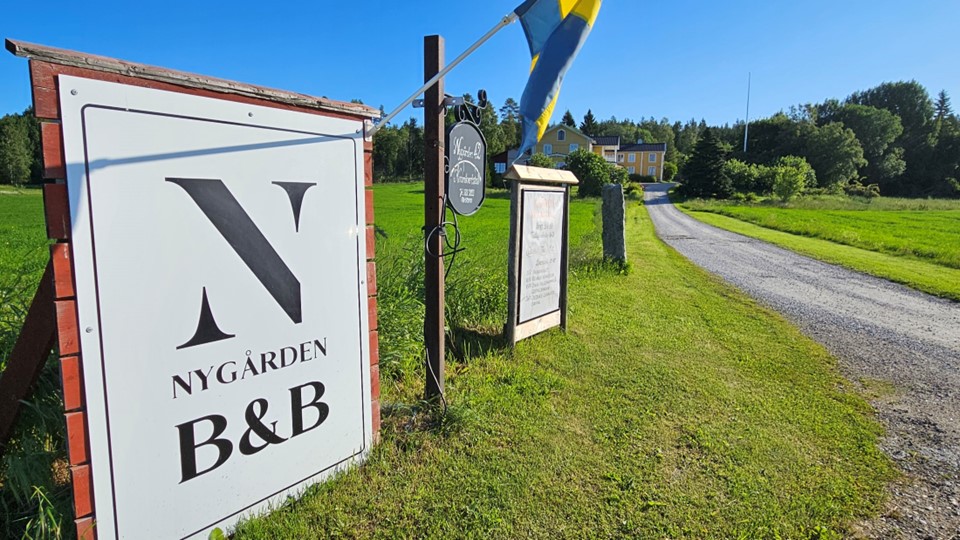
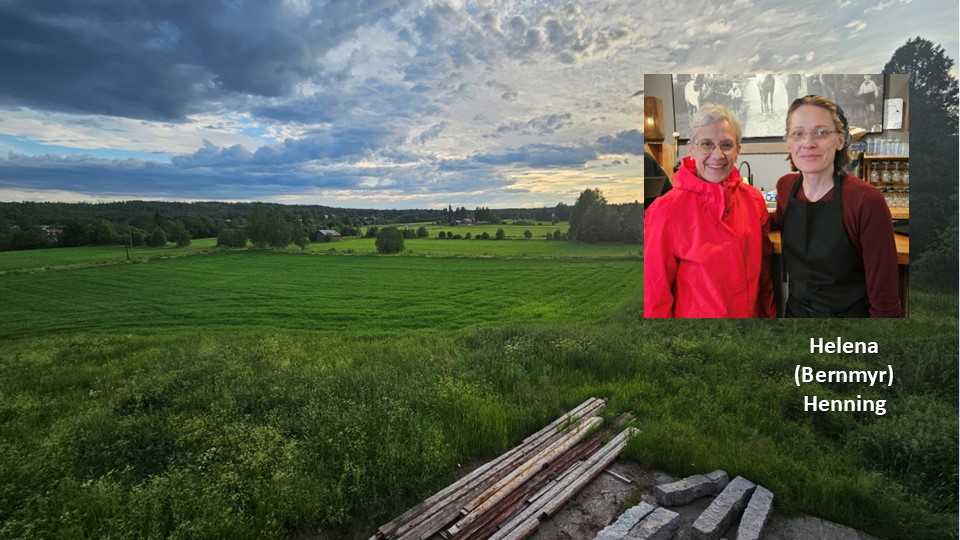
Planes, Trains and Automobiles, sounds like a good title for movie. It took all of those modes of transportation to travel to Scotland, Denmark and ultimately Sweden. We needed a place to stay. Camilla recommended the Nygarden B&B in Harminger, just a short drive from Gnarp. It is operated by Helena (Bernmyr) Henning and her husband Andreas. Perfect place for us to headquarters. Great room, delicious food, tranquil environment, fantastic hosts.
Tomorrow: Finally Gnarp…
Day 16
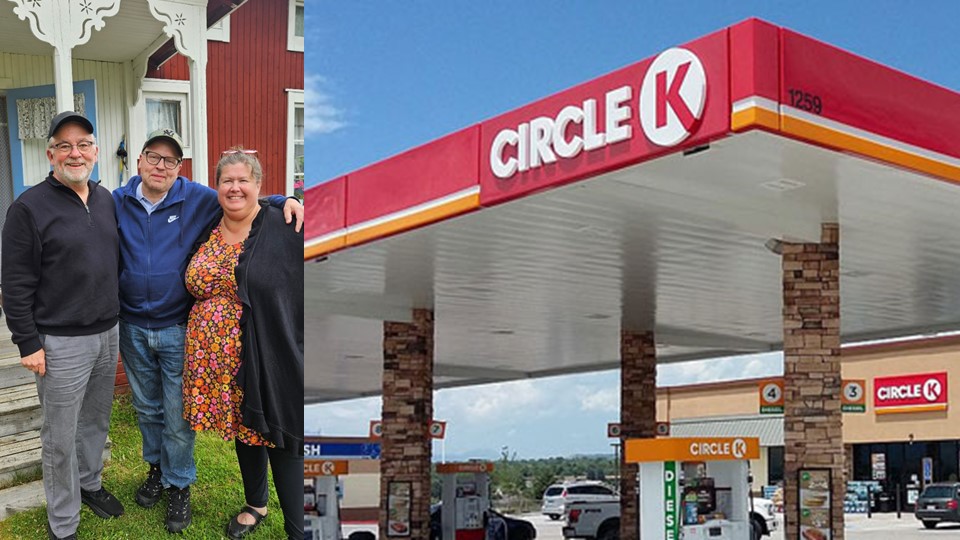
“Meet me at the Circle K in Gnarp at 10:00 am.” That was our instruction from Camilla Johanna. She hopped in our car and off we went. “Turn left, turn right, turn left, etc., just like our Google Maps lady only in person with information about Gnarp, the surrounding area and more about my family then we could have imagined. “Pull into that farm.”
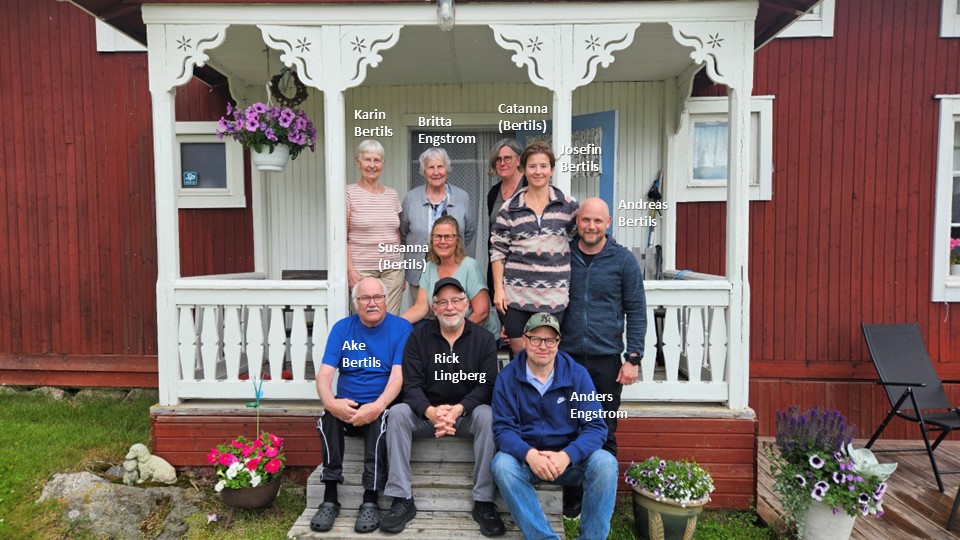
People spewed out of the old farm house, maybe 15 to 20. “Who are they?”, I asked. “Your family,” was the reply. The house was once Susanna’s and now occupied by her granddaughter Karine Bertils and her husband Ake. For the first time in 157 years Brita Lingberg and sister Susanna’s families were united. What a thrill! Pictures and information were exchanged and a special surprise from cousin Andreas Bertil.
Tomorrow: The American Letters
Day 17
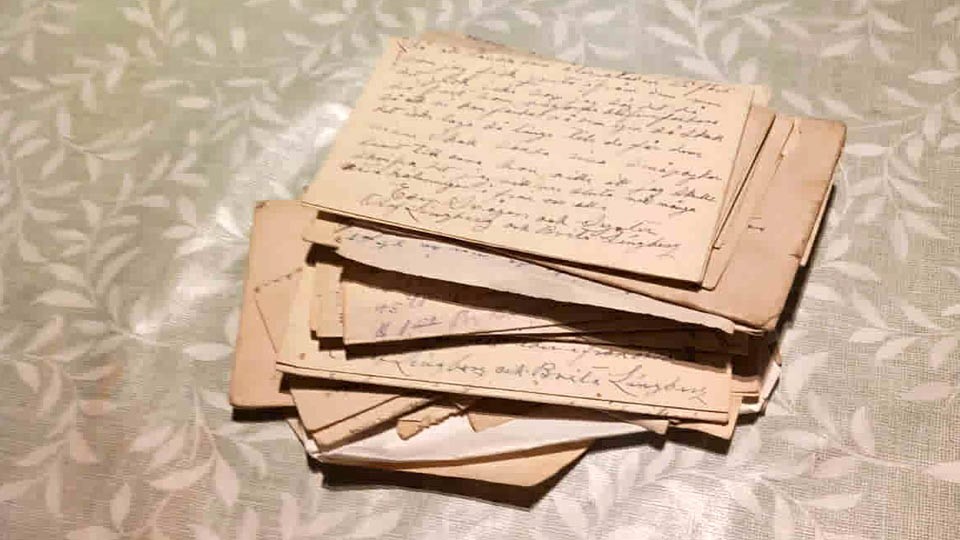
In a clear, zip-locked bag were ages old pieces of paper with hand-written script from 150 years ago.
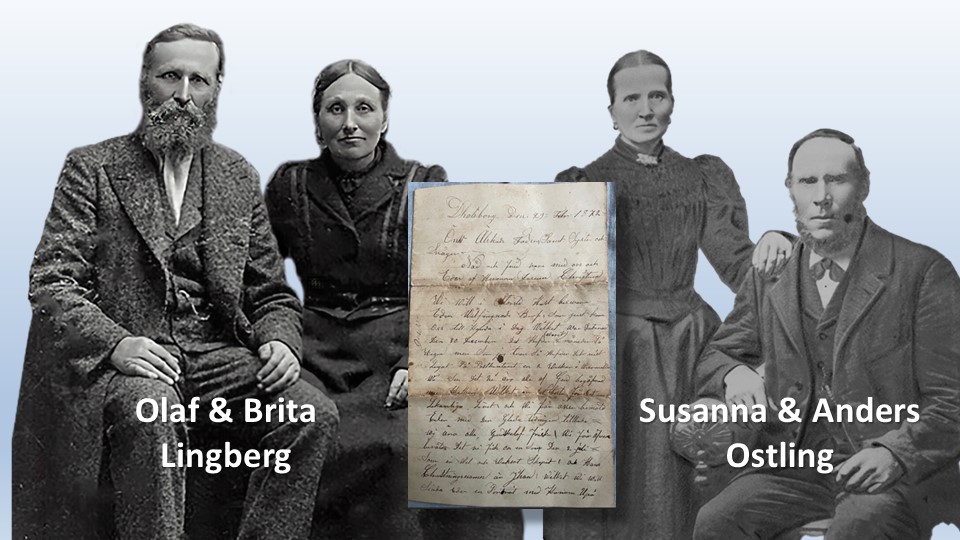
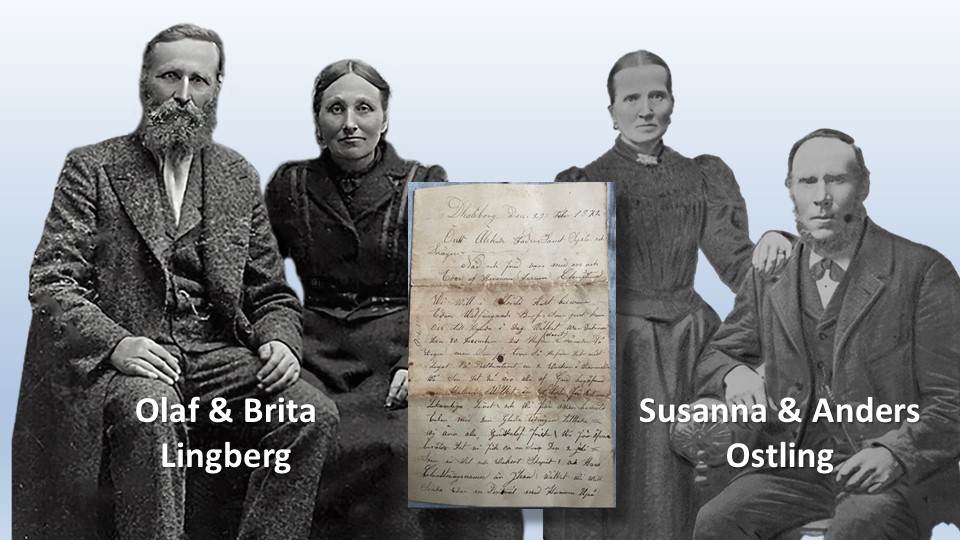
Actual letters from Olof and Brita Lingberg from America to Susanna and family in Sweden. Andreas says he recently discovered them in his mother’s attic. His plans were to translate them from “Old Swedish” to “Today’s Swedish” and then to English. I pleaded, “Certainly you will send me the English version when completed.” He said, he would.
More on the content of those letters, later.
Tomorrow: Olof and Brita’s birth places
Day 18
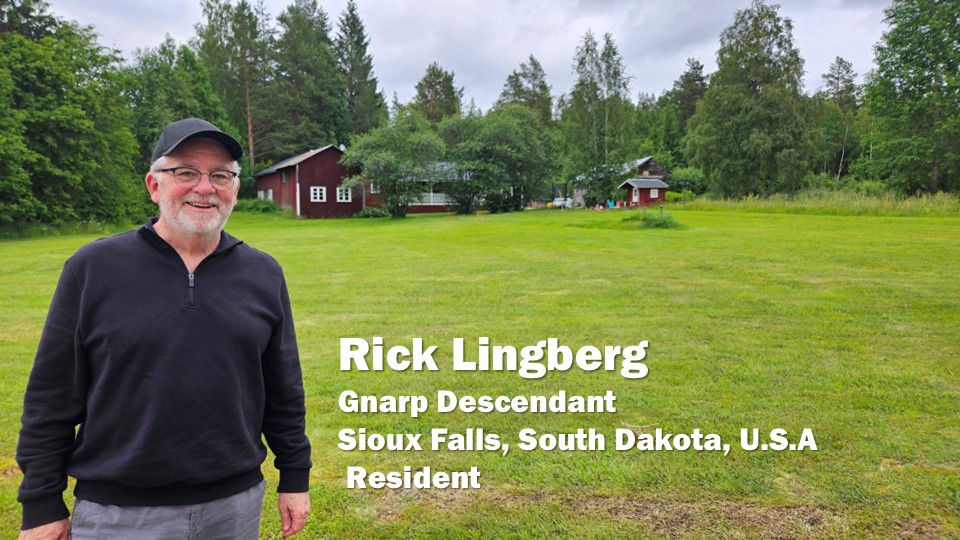
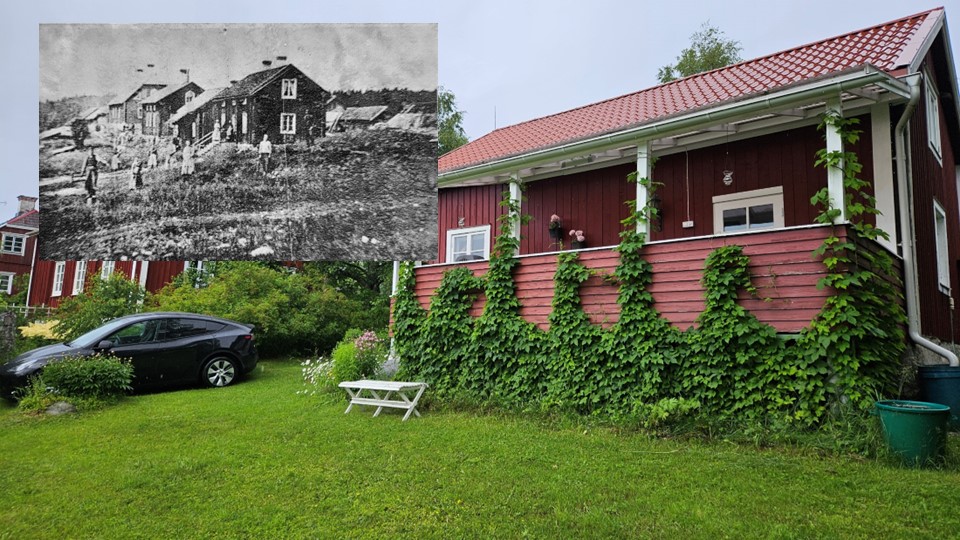
We’re back in the car with Camilla. She takes us to another farm stead. It’s the home place of Brita and Susanna at Skesta, Gnarp. It’s one thing to be told about the location of your ancestors birth and early development years. It quite something else to put your feet on the ground of the same. Profound!
Then for good measure, the same with Olof’s birthplace and home. At least until he was orphaned at 6 years of age.
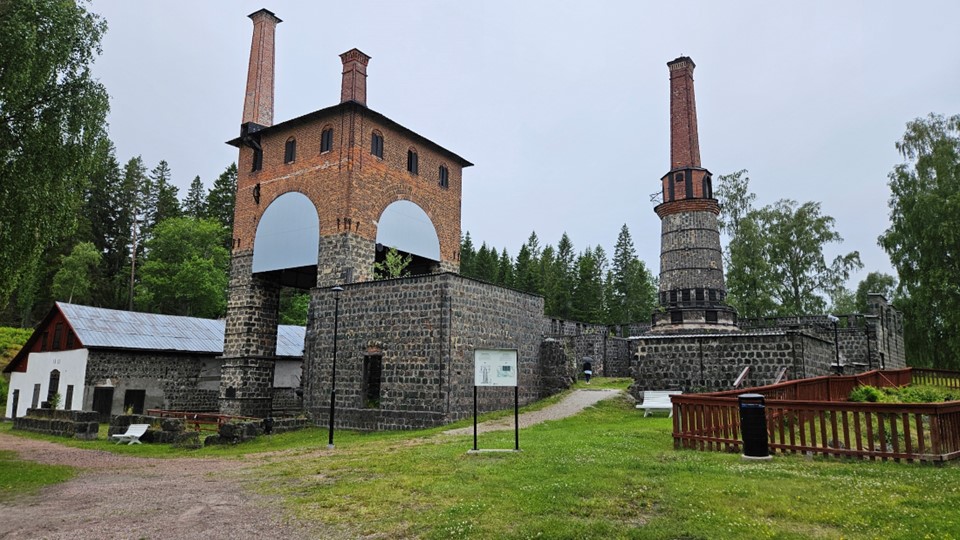
Across the road is the remnants of an old foundry. We are pretty sure where Olof’s father, Erik, worked. Thus the name Masugnen (masugn = blast furnace) Here’s a restored foundry only a few miles away.
Tomorrow: More relatives, “Heard you were in town.”
Day 19
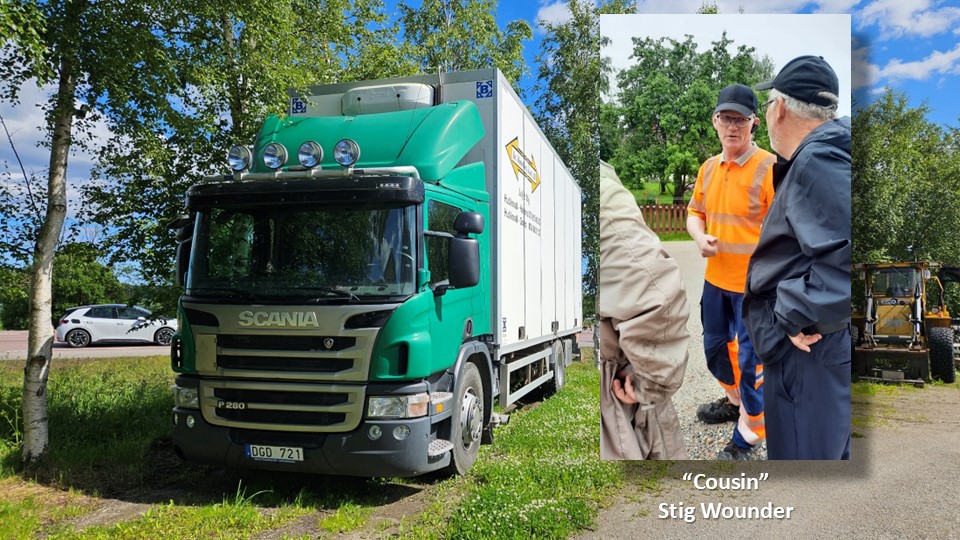
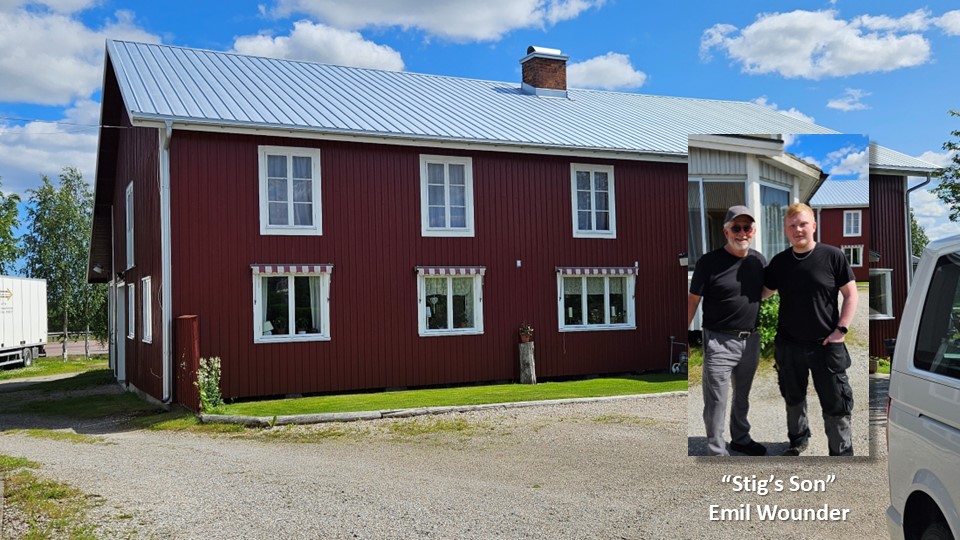
Seems like every time we turn around there’s another relative. Camilla steps in front and stops a large truck. Turns out it’s Stig Wounder, another cousin. After a brief introduction he casually comments, “We heard you were in town.”
Later we stopped by Stig’s house located on the out-skirts of Gnarp. It was there I met Stig’s son, Emil. He gave us a tour of the house next to theirs. It’s the red one seen in the photo. It had once belonged to Jan & Anna Hansson’s home, Olof’s grandparents which he moved in with after the death of his parents.
Tomorrow: Olof & Brita, where they met.
Day 20
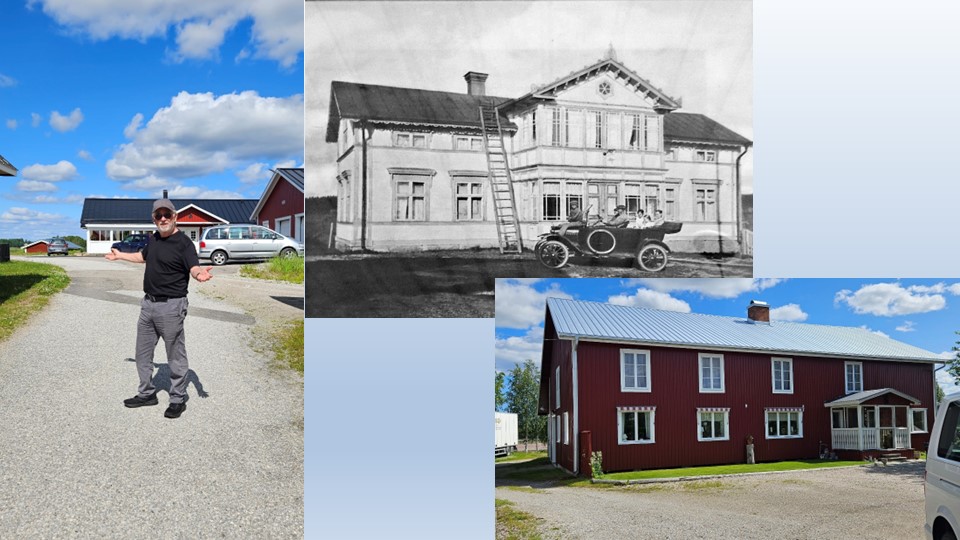
In 1861 when Olof was about 17 years of age he would move down the path and go to work (farm hand) for his uncle Abraham Ingberg. A picture of the Ingberg house hangs in the white home directly behind me (Camilla Johanna’s mother’s house which is the former Ingberg home site which was destroyed in a fire).
Brita would move in with the Hanssons to work on their farm. Only a couple of hundred meters separated the two homes. I may be standing on the spot where they met. Can’t say for sure, but whatever “spot” it was I can assure you dozens of American Lingbergs are glad they did.
Speaking of the name Lingberg…
Tomorrow: “Lingberg” we think we know its origin…maybe.
Day 21
There is no documentation to prove this, but our best guess is when Olof registered for the military he combined the first letter of his parent’s last name (L) with his uncle’s last name (Ingberg) and invented Lingberg, something that he could call his own. It’s pure speculation, but until someone can tell us differently that’s our story.
Tomorrow: Nuptials…Thank God
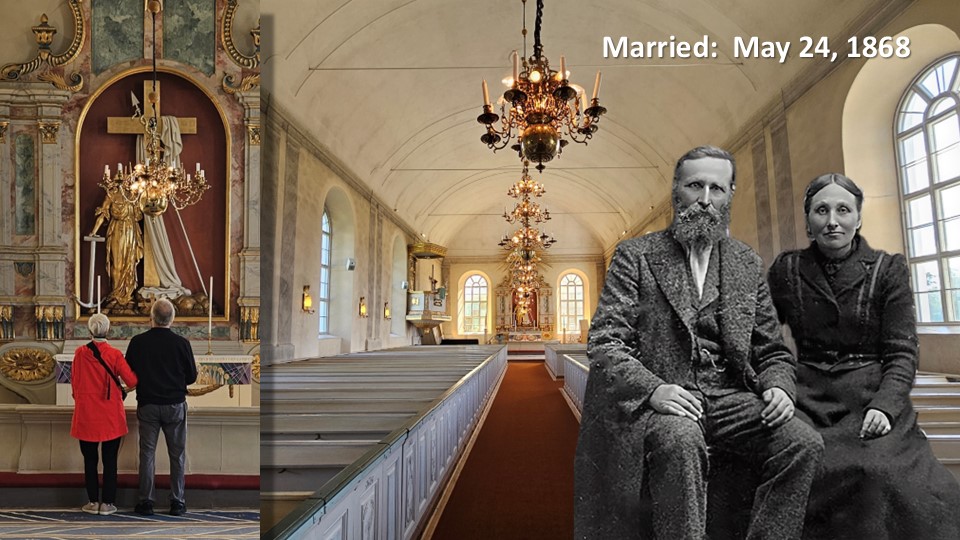
Day 22
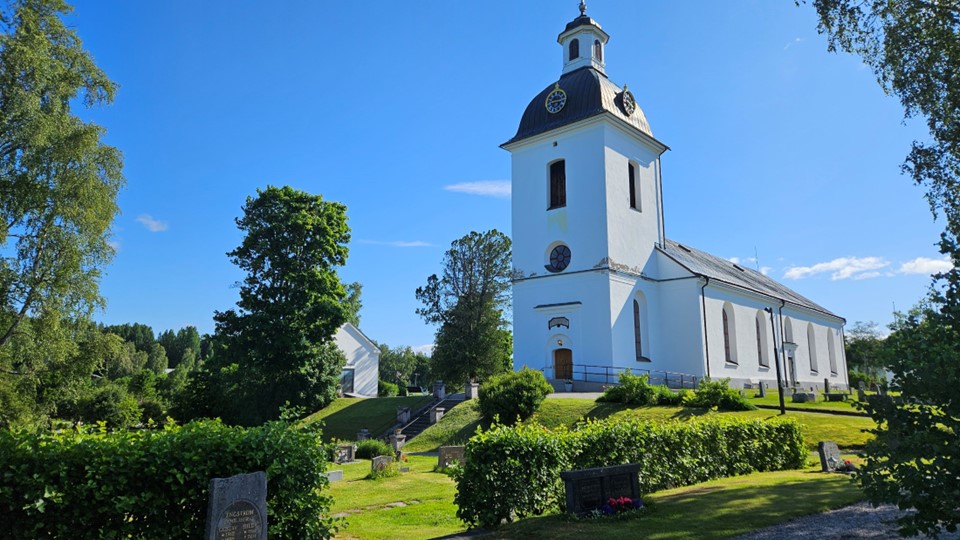
Our visit to Gnarp would not have been complete without a visit to the Gnarp Lutheran Church. Here is the altar where Olof and Brita promised themselves to each other. It would take a journey of 5,000 miles and 157 years for a Lingberg (me) to return to that spot. A remarkable moment for both Mary and myself.
Tomorrow: The journey to America
Day 23
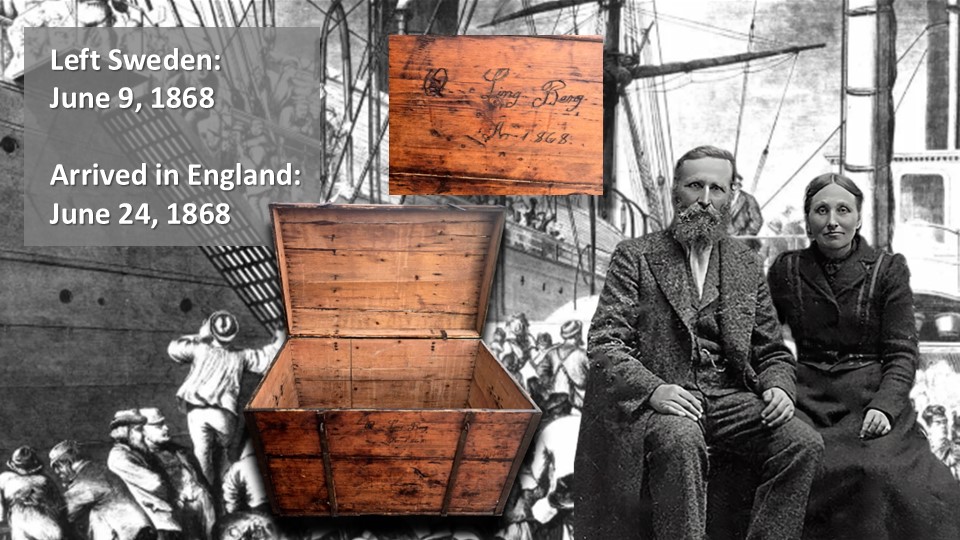
On June 9, 1868 with hopeful optimism, a chest full of all their worldly possession in the accompaniment of 40 other Gnarp area citizens, Olof and Brita would begin their journey for a new life. Destination – Clay County, Dakota Territory, U.S.A.
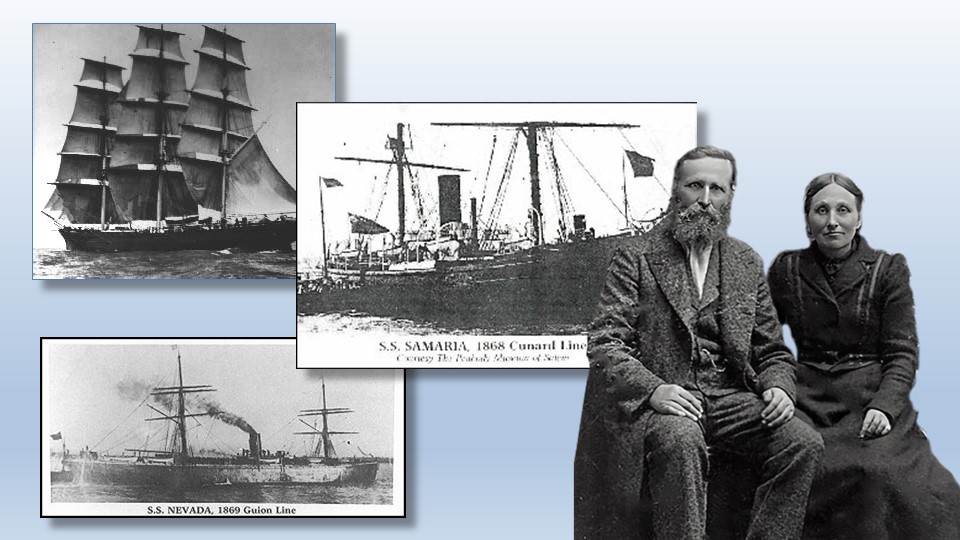
In 1869 Sweden adopted a law that required the registration of emigrants leaving Sweden and thereby creating of passenger lists of their departures. Having left a year earlier, in 1868, we’ve found little information about their exact course. However, we do know that a trans-Atlantic trip on one of the ships of the day would take between 16-24 days.
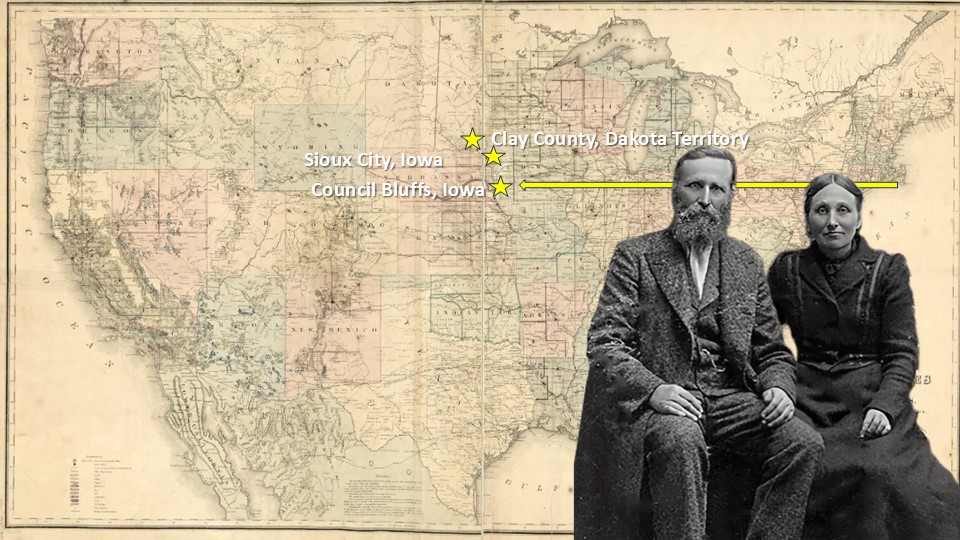
Olof and Brita most likely landed in the New York City area and would travel by rail across country. According to the “Swede Book” they would arrive in Council Bluffs, Iowa and then make their way to Sioux City, Iowa where they would live and work for the next two years.
Tomorrow: The homestead
Day 24
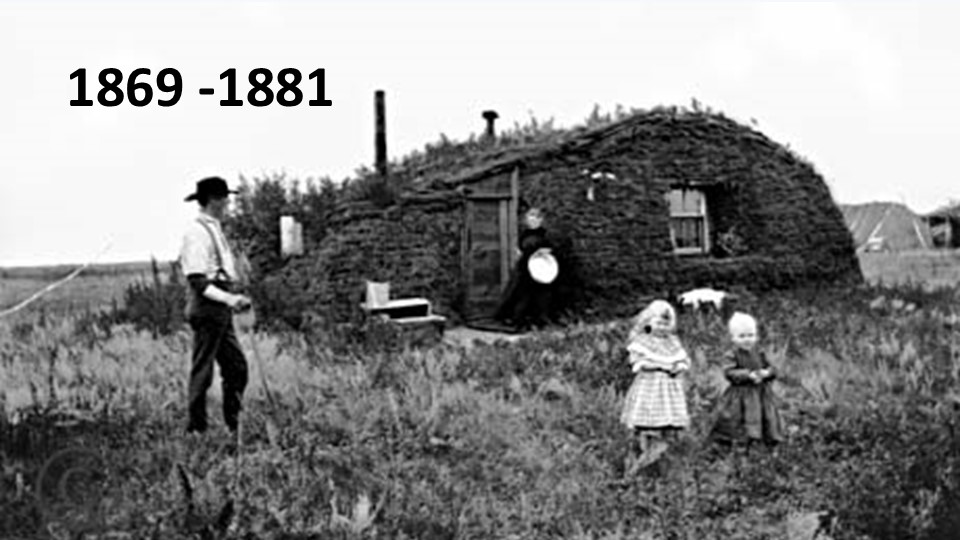
The following year, 1869, Olof and other Swedish immigrants would travel to Clay County to file their claims. He filed on his claim on May 4, 1869 (160 acres). He would construct a “dug-out house” on the claim similar to the one shown in this picture, they would live in that for 11 years. In 1870 the Lingbergs would travel by foot from Sioux City to the homestead (47 miles). According to the “Swede Book”, …they bought a cow that had a young calf. Lingberg led the cow home up to their claim, Mrs. Lingberg walking behind carrying their first child (John) and helped chase the calf along.
They would describe their claim in their own “American Letter” to Brita’s family.
So you pay 14 Dolar (Homestead filing fee) in that land, you must live 5 years and then you get permanent letters on the land. Then it’s yours. After that you can sell it and do whatever you want.
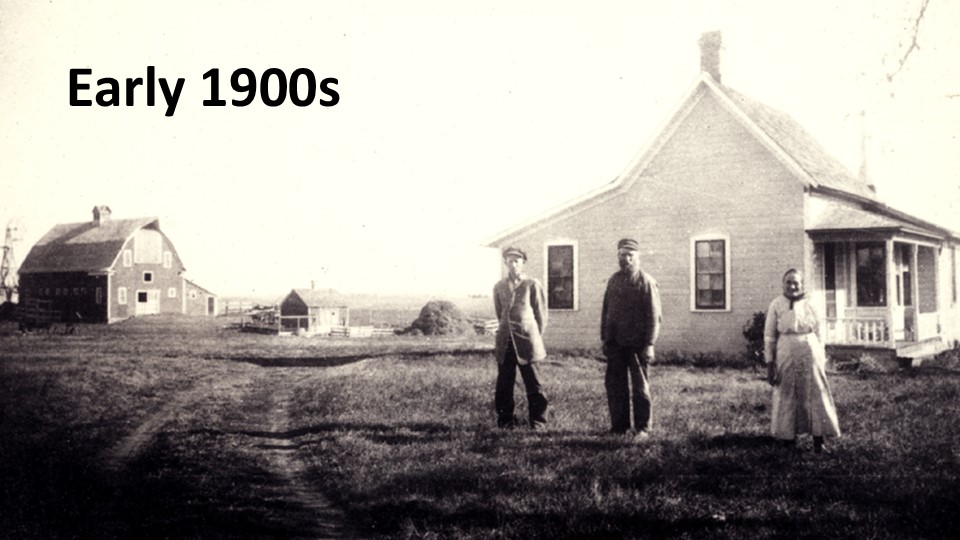
Olof and Brita a few years later would buy another 80 acres adjacent to their homestead. They were a young couple who in Sweden practically had no chance to own their own land who now possessed 240 acres of fertile Dakota farmland on which to raise their family. My family.
Tomorrow: Final thoughts
Day 25
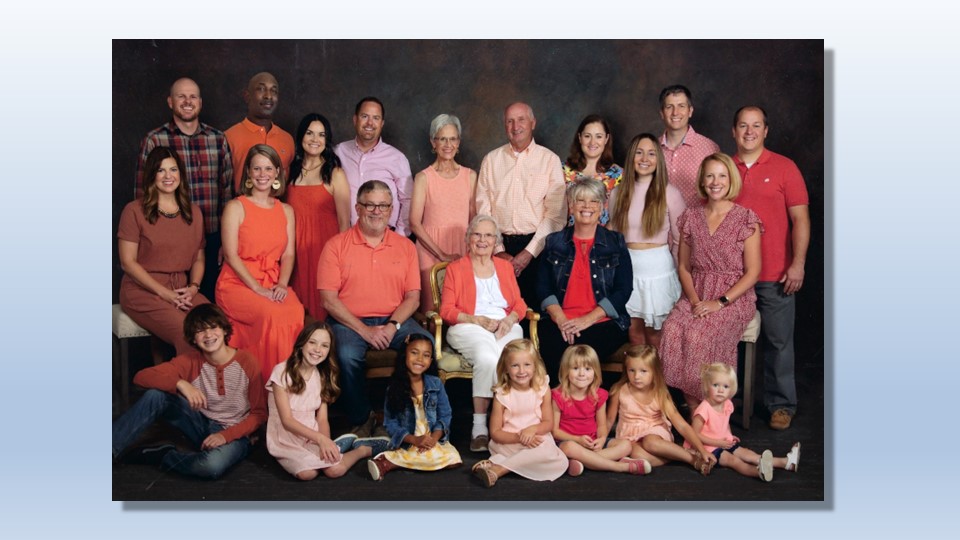
Someone once said, Our stories need to be told or they die, and when they die we can’t remember where we came from, who we are or why we’re here. I didn’t want that to happen to my family. Here they are. My kids and grandkids on the left, my sister, Teri Olson, on the right. Mom, may she rest in peace, in the center.
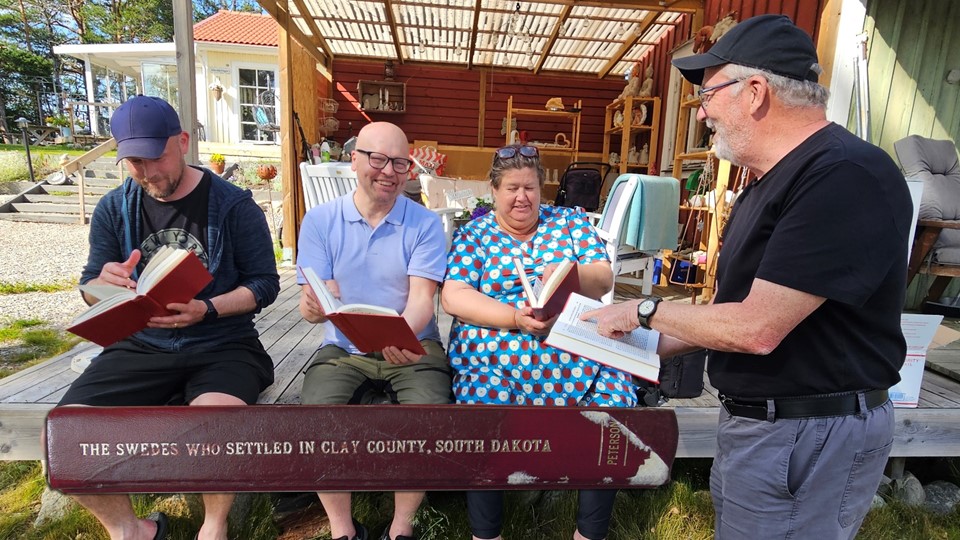
There are lots of people to thank for helping me remember all of that, which I now can share with my family so they can remember, too.
Special thanks to my Swedish cousins Andreas Bertil, Anders Engstrom and our special guide, Camilla Johanna. Because of you this gravestone will no longer just be a rock in a cemetery of a South Dakota country church with our name on it. It’s now a symbol of an everlasting story of who we are and where we came from and why we are here.
Thanks so much to all of you for following our story. I hope you got something out of this. I know I did.
Tack så mycket.
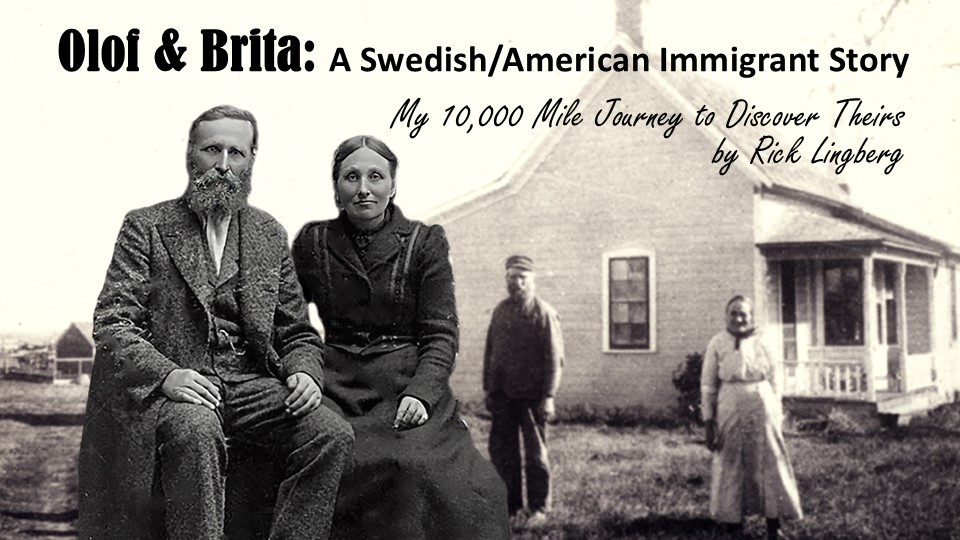
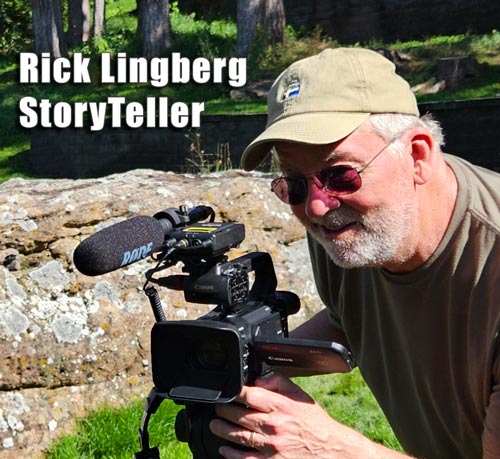
Telling good stories and delivering them to the marketplace is about all I do. I call it StoryTelling America.
There is a proverb that says, tell me a fact and I’ll learn, tell me a truth and I’ll believe, but tell me a story and it will live in my heart forever.
I think everybody has a story worth telling and sharing one’s life experiences may be the most valuable asset a person can give…your successes, your failures and your accomplishments and your dreams..
Let me help you do just that.